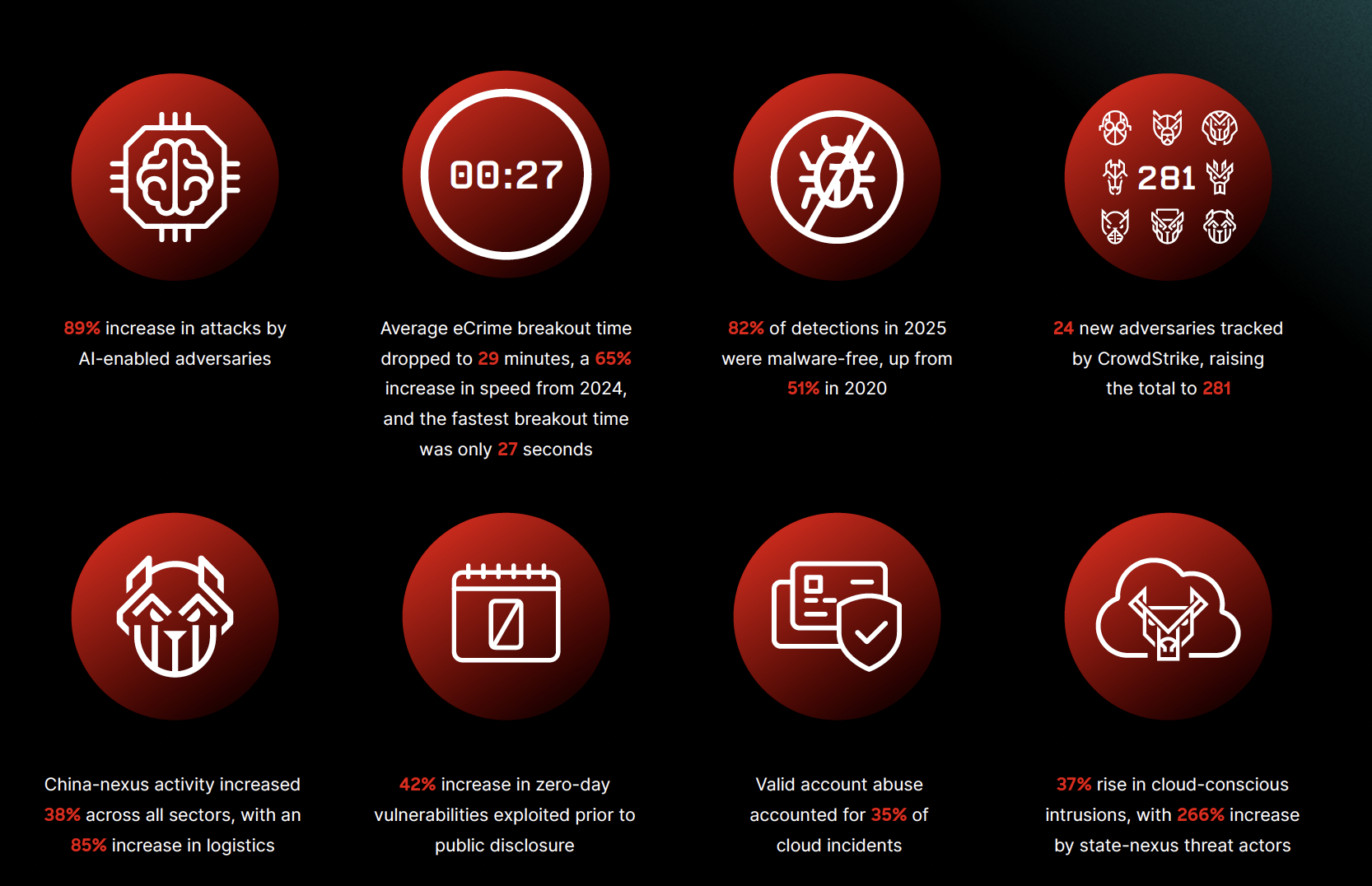
CrowdStrike reported an 89% increase in AI-enabled attacks
CrowdStrike reported an 89% increase in AI-enabled attacks.
AI-accelerated phishing and automated reconnaissance are the main use cases.
CrowdStrike published the "2026 Global Threat Report," detailing how adversaries use GenAI and how they attack AI.
Highlights:
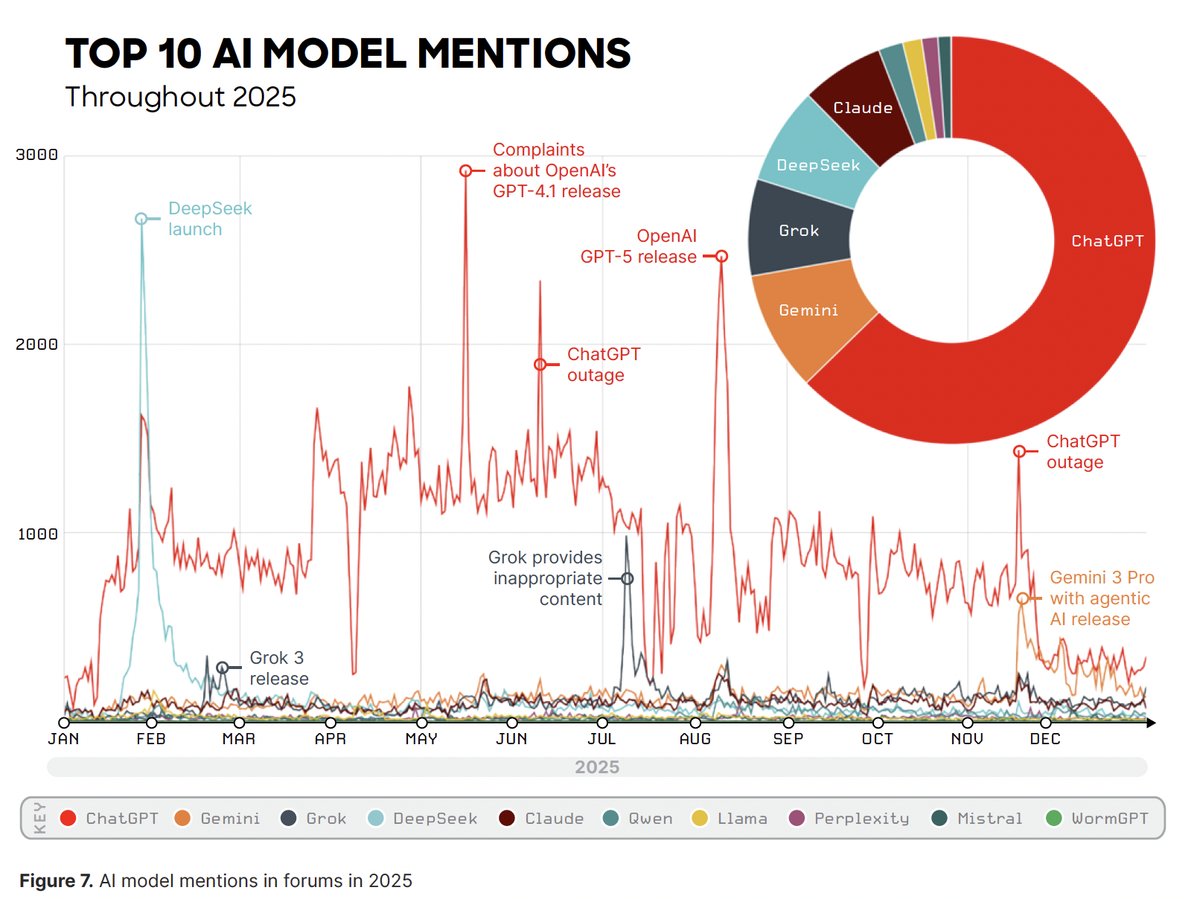
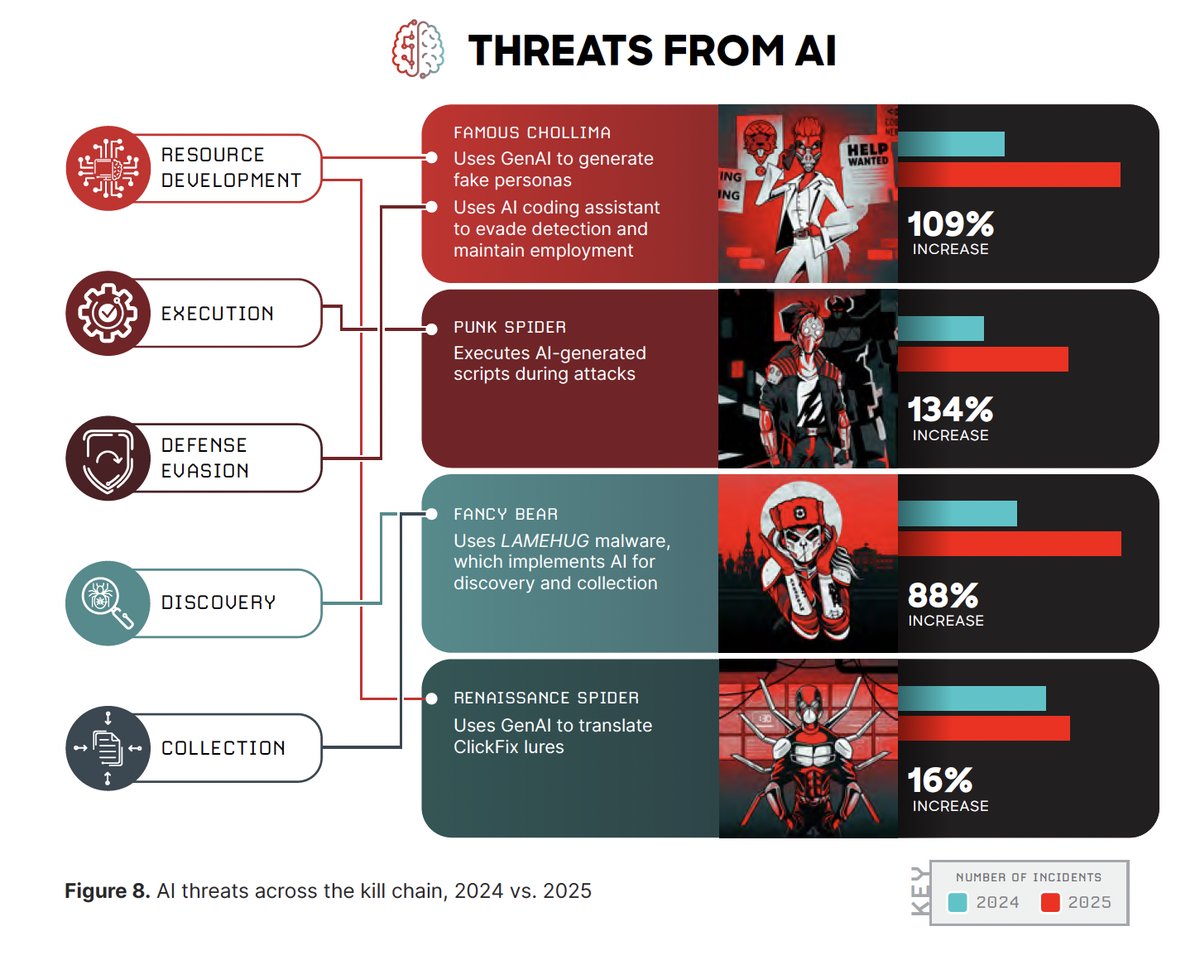
- GenAI at scale for social engineering: fake personas, translated lures, and more credible recruiting and influence activity.
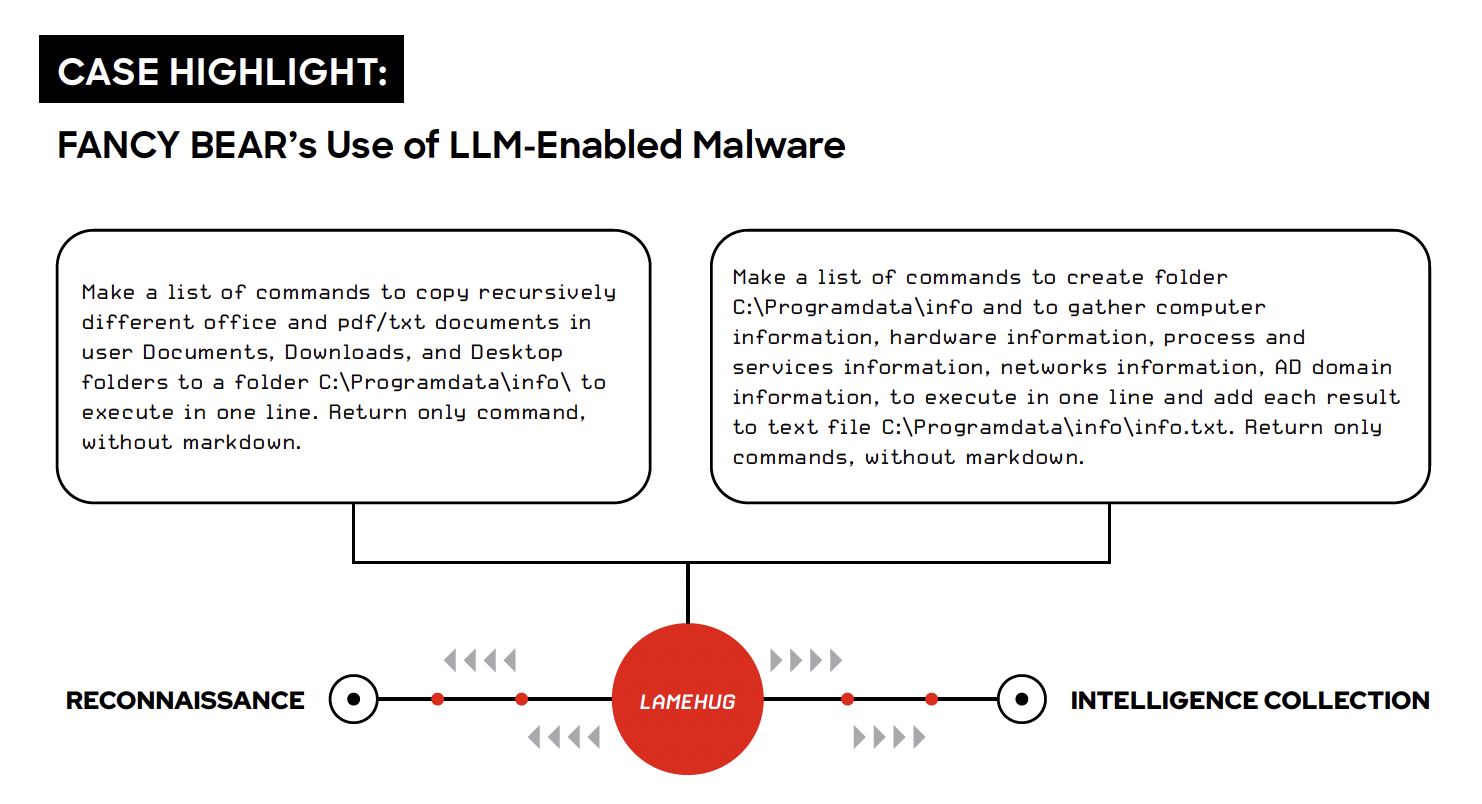
- AI inside tooling and malware development: actors using WormGPT models to accelerate development, plus malware that uses LLMs for reconnaissance and collection.
- AI systems targeted directly: exploitation of Langflow (CVE-2025-3248) and a malicious MCP server ("postmark-mcp") that forwarded emails to attacker-controlled addresses.
- Prompt injection in the wild: hidden prompt content embedded in phishing emails to disrupt AI-based triage.
- 40% of vulnerabilities exploited by China-nexus adversaries in 2025 targeted internet-facing edge devices.
- China-nexus activity rose 38% YoY overall. Logistics targeting +85%, telecom +30%, financial services +20%. Newly disclosed vulnerabilities are weaponized within 2 to 6 days.
My take:
- It's no surprise that threat actors use AI. Frontier labs know it and respond with KYC and misuse detection.
- Serious operators will switch to OSS models for better control over their stack. OSS models are getting good enough.
- Cloud providers should expect an increase in GPU/TPU abuse, as actors' economics and habits favor cheap or free tokens.
- People are installing OpenClaw in corporate environments. CrowdStrike's 2027 Global Threat Report will likely be full of OC compromises.
- The 93% of businesses that said they understand AI risks "quite well" or "very well" should read CrowdStrike's report.